Fever can raise blood glucose even when you are eating less, while vomiting, diarrhoea and missed meals create a separate risk of hypoglycaemia, dehydration and ketones. You will learn how to monitor readings, fluids, food and medicines, recognise emergency signs, and prepare the information needed for timely care in Pune.
Key takeaways
- Check temperature and blood glucose when fever begins, then record every reading.
- Seek urgent care for severe dehydration, confusion, breathing trouble or persistent vomiting.
- Do not stop insulin without medical advice, even when fever reduces your appetite.
- Take glucose readings, medicine doses, fluids, symptoms and test results to your clinician.
What to Check in the First Hours of a Fever
Check your temperature and capillary blood glucose as soon as the fever begins. Infection-related stress hormones can raise glucose even when you are eating less. Vomiting, diarrhoea, fasting and dehydration can instead cause a rapid fall, or produce dangerous swings in either direction.
People using insulin should follow their clinician’s written correction plan. Do not wait for the fever to settle, skip prescribed insulin, or change doses independently. Blood sugar care during fever depends on the trend, food and fluid intake, medicines, and symptoms.
Record each check in a simple log:
- Time and temperature
- Capillary glucose result
- Insulin or other medicine dose
- Fluids taken and food tolerated
- Urine frequency or noticeably reduced output
- Vomiting, diarrhoea, pain, breathing changes, weakness or other symptoms
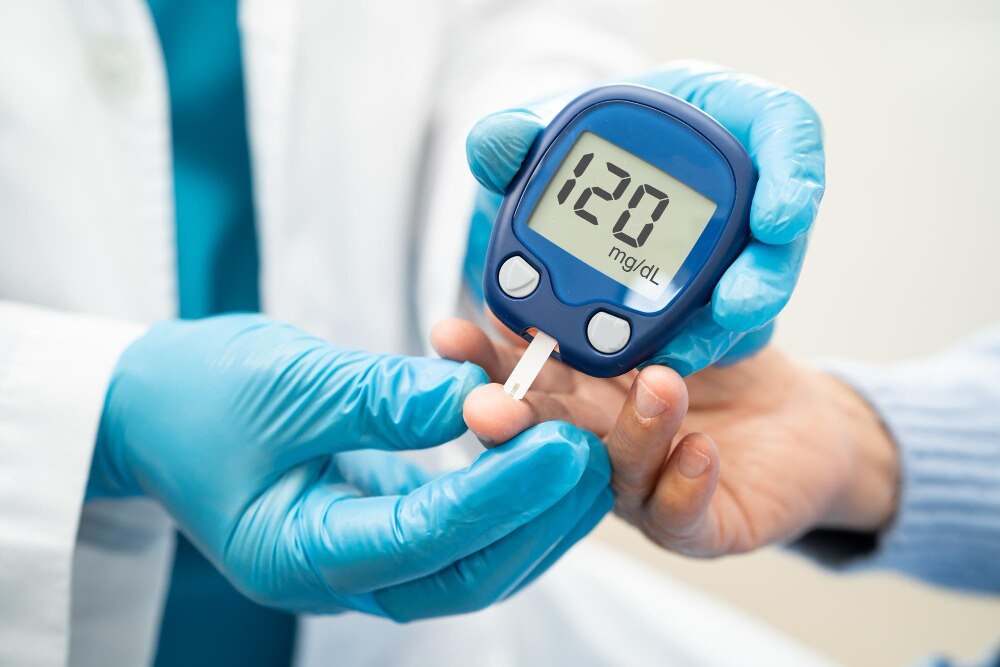
Check and record glucose at least every four hours while you remain ill, including overnight if your clinician’s plan requires it. Use the meter correctly and write the units shown, such as mg/dL.
One reading cannot show whether the infection or hydration is improving. Review the pattern across several readings. Recurrent glucose results above your agreed target require medical advice, even when the temperature is modest or appetite is returning.
This fever during diabetes management record also helps a clinician decide whether you need same-day assessment, medication changes or additional testing.
Which Readings and Symptoms Need Urgent Action
A glucose reading around 240 mg/dL (13.3 mmol/L) or higher that persists calls for ketone testing. Test sooner whenever a person with type 1 diabetes is unwell, even if glucose is not extremely high. A blood ketone meter measures capillary beta-hydroxybutyrate; urine ketone strips change colour.
Follow the product instructions, check expiry dates, and record the time, glucose and ketone result.
| Finding | Action | Why it matters |
|---|---|---|
| High ketones with vomiting, abdominal pain, deep or fast breathing, fruity-smelling breath, severe weakness, marked drowsiness or confusion | Emergency assessment now | Possible diabetic ketoacidosis |
| Very low glucose, inability to keep fluids down, severe breathlessness, faintness or confusion | Emergency assessment now | Risk of rapid deterioration |
| Persistent high glucose, ketones without severe symptoms, dehydration or reduced urine output | Same-day medical advice | Home monitoring is no longer enough |
| Fever with a new hot, swollen, very painful joint or inability to bear weight | Same-day assessment | Septic arthritis needs prompt evaluation |
Do not wait for routine diabetes care for fever in Pune if these signs appear. Inspect both feet daily: spreading redness, warmth, swelling, drainage, bad odour, a new ulcer or black tissue needs urgent assessment, even without severe pain because neuropathy can hide injury.
This blood sugar care during fever also requires help for any suspected deep infection or systemic illness.
How Medicines, Fluids and Food Change During Illness
There is no safe universal sick-day medicine rule. Do not stop insulin, especially basal insulin in type 1 diabetes, without explicit medical advice: infection and inadequate insulin can trigger diabetic ketoacidosis (DKA), even when you are eating less.
Diabetes management for when fever develops in Pune requires a written, medicine-specific plan rather than stopping every drug automatically.
- Ask the prescriber whether to withhold metformin during significant dehydration or vomiting; reduced kidney function during dehydration raises the risk of lactic acidosis.
- Ask how to handle sulfonylureas when meals are missed, because taking them without food can cause dangerously low blood sugar.
- Pause an SGLT2 inhibitor only according to the agreed plan during acute illness, fasting or dehydration; DKA can occur without very high glucose.
- Sip small, frequent amounts of sugar-free fluid when glucose is high. If food intake is poor, use carbohydrate-containing fluids only when your plan calls for them.
- Choose small portions, soup, yoghurt or other easily tolerated foods. Do not take a meal-dependent medicine without eating unless your clinician specifically instructs you to.
Kidney failure, heart failure and a prescribed fluid restriction change how much you can drink, so obtain individual advice rather than following generic blood sugar care during fever guidance. Continue checking glucose and follow the correction plan already supplied; fever can raise glucose despite reduced intake.
Seek medical advice if you cannot keep fluids down, readings repeatedly exceed your agreed target, or ketones appear.
What Fever Care in Pune Should Investigate
Diabetes does not identify the cause of a fever, and Pune’s season does not do so either. A clinician uses the symptoms, fever duration, exposures, travel history and examination to decide whether testing is needed. The assessment also checks hydration, urine output, glucose trends, ketones when indicated, and possible infection sites.
| Possible focus | Clues that guide assessment | Why it matters |
|---|---|---|
| Respiratory infection or COVID-19 | Cough, sore throat, congestion, breathlessness, sick contacts | Breathing problems need prompt review |
| Urinary infection | Burning urine, urgency, flank pain, confusion | Infection can worsen glucose control |
| Skin, foot or joint infection | Redness, warmth, swelling, drainage, a wound, inability to bear weight | A deep infection or septic joint needs same-day care |
| Dengue or malaria | Severe body aches, headache, rash, bleeding, mosquito exposure or relevant travel | Testing and medicine choices differ |
For fever relief, use paracetamol only within the product’s dose limit after checking liver disease, alcohol use and combination cold medicines. Do not casually choose ibuprofen, aspirin or another NSAID when dengue is possible because bleeding can occur.
Abdominal pain, persistent vomiting, bleeding, unusual lethargy or breathing difficulty needs urgent review. Diabetes care for fever in Pune should also escalate for dehydration, ketones, confusion, shock or suspected diabetic ketoacidosis.
For someone seeking diabetes consultation near Mohammed Wadi, Vivaan General Care And Orthopaedic Clinic can provide same-day evaluation of fever, hydration, glucose trends, ketones and possible foot or musculoskeletal infection, with emergency referral when severe dengue or DKA is suspected.
Related service
Diabetes Management Diabetes Management is a medical service focused on monitoring blood sugar levels, controlling diabetes, and reducing the risk of diabetes-related... View service → |
The Sick-Day Record and Recovery Plan to Take to Care
Take a written timeline to care; it gives the clinician usable evidence instead of a memory-based account of fever during diabetes management.
1. Record the date and time of each temperature, glucose reading and ketone result. Add the amount of fluid taken, urine frequency or reduced output, food tolerated, insulin and other medicine doses, vomiting, diarrhoea, breathing changes, pain and other symptoms.
2. Photograph a new blister, redness, swelling, wound or colour change on the foot. Photograph medicine labels when the product or dose is unclear, and bring the glucose meter, ketone meter or written log.
3. Note every insulin correction or medicine change and why it was made. A clinician can then see whether glucose rose with infection, fell after missed meals, or changed with dehydration. This record supports diabetes management for when fever develops in Pune without relying on one reading.
4. Keep following the agreed glucose and ketone monitoring schedule after the temperature falls. Fever can remain relevant because infection-related stress and reduced intake can keep glucose unstable for several days.
Return to usual medicines or alter insulin only according to the clinician’s instructions. Arrange a review if insulin doses were repeatedly changed, hypoglycaemia occurred, ketones appeared, a wound was suspected or the fever’s cause was not established. Bring the record to that appointment, even if you feel better.
Frequently asked questions
What should you check during the first hours of fever with diabetes?
Check your temperature and capillary blood glucose when fever begins. Record readings, fluid intake, food, medicines and symptoms so changes are visible.
Which fever symptoms require urgent action during diabetes management?
Seek urgent medical care for confusion, difficulty breathing, severe weakness, persistent vomiting, inability to keep fluids down, severe dehydration or very abnormal glucose readings.
How should medicines, fluids and food change during a fever?
Sip fluids regularly, choose manageable carbohydrate-containing foods when possible, and follow your clinician’s sick-day instructions. Do not stop insulin or alter diabetes medicines without medical advice.
What should you take to a diabetes consultation near Mohammed Wadi after fever?
Take your temperature and glucose log, medicine list, doses and timing, food and fluid record, vomiting or diarrhoea details, and any test reports.
Keywords