Persistent joint pain, reduced movement, repeated sprains, back pain, or difficulty walking can be difficult to judge at home. By understanding what an orthopaedic clinic examines, when symptoms require urgent care, and how treatment decisions are made, you can choose the right level of help and prepare for a more useful assessment.
Key takeaways
- Seek urgent care for an open fracture, severe deformity, or loss of circulation.
- Choose an orthopaedic assessment for persistent pain, instability, weakness, or restricted movement.
- Bring imaging reports, medication details, injury dates, and your main questions.
- Use imaging to confirm a diagnosis, not to replace a physical examination.
What an Orthopaedic Clinic Examines and Why the Assessment Matters
An orthopaedic clinic examines the whole movement system, not only the painful spot. The clinician evaluates bones, joints, muscles, ligaments, tendons and nerves, along with strength, stability, gait and posture, and range of motion to understand how the problem affects bone and joint health.
1. You describe the symptoms: persistent joint pain, swelling, stiffness, reduced movement, recurrent sprains, back or neck pain, difficulty walking, or a possible fracture. Explain when the pain began, whether an injury caused it, what triggers or relieves it, and whether numbness or weakness occurs.
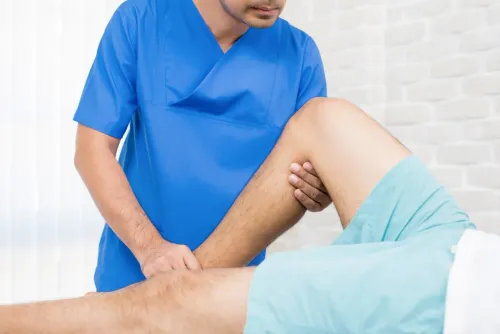
2. The clinician performs a physical examination. They inspect swelling, bruising, deformity and alignment, feel the area, compare both sides, and check circulation, sensation and motor function when a fracture is suspected.
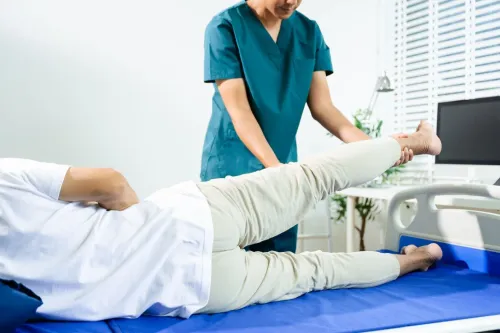
3. Movement testing shows how far a joint moves and whether pain, weakness or instability appears. A gait and posture assessment can reveal a problem in the hip, spine, foot or another area that is not where you feel pain.
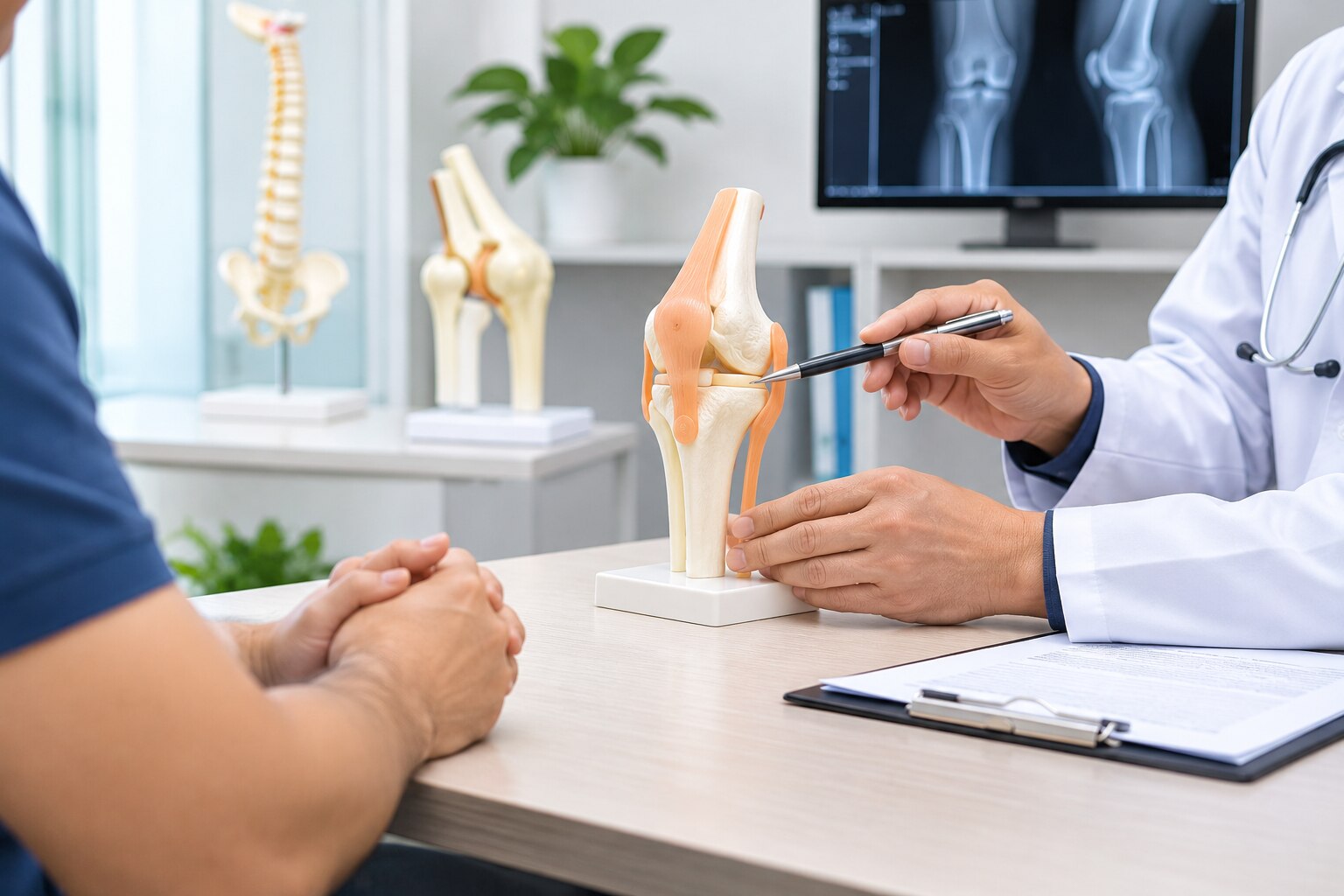
4. Bring previous X-rays, MRI reports, scan images and treatment records for review. An image shows structure, but examination findings and function show how that structure affects you; even extensive osteoarthritis on an X-ray may cause little disability, while modest-looking changes can be painful.
Persistent pain with fever, unexplained weight loss, night sweats, cancer history or marked night pain also deserves assessment rather than an assumption of routine strain.
When You Need an Orthopaedic Clinic, a Physiotherapist, or Urgent Care
Mild pain that is improving after sensible activity modification can start with home care: reduce aggravating movement, keep the joint gently mobile, and monitor progress. Persistent pain, swelling, stiffness, reduced function, recurrent injuries, or suspected fracture needs clinical assessment.
A general physician can investigate broad medical causes, review medicines, and coordinate referrals. Choose an orthopaedic clinic when the concern involves bone or joint structure, movement, injury, or a suspected musculoskeletal diagnosis; this is when to see an orthopaedic doctor. Referral does not automatically mean surgery.
Seek emergency care for these orthopaedic emergency signs:
- A visible deformity after injury or inability to bear weight
- A cold, pale, or numb limb, or sudden weakness
- Severe pain out of proportion to the injury with a tense, swollen limb or pain when the limb is passively stretched; this can indicate acute compartment syndrome
- Severe joint swelling with fever
- Back pain with new bladder or bowel dysfunction, saddle numbness, or progressive leg weakness; these symptoms require urgent assessment for possible cauda equina syndrome
Do not assume a strain if pain comes with fever, unexplained weight loss, night sweats, a cancer history, or marked night pain. These warning signs need assessment.
Physiotherapy is central after assessment when you need to restore strength and function. A useful plan may include progressive strengthening, mobility or aerobic exercise, activity modification, pacing, and self-management advice—not only heat, massage, or ultrasound. A suspected fracture also requires circulation, sensation, and motor checks before and after immobilisation or reduction.
How Imaging and Diagnosis Guide Treatment Without Replacing Examination
An orthopaedic consultation combines your history, physical examination, movement testing, and review of previous records. Orthopaedic imaging answers a narrower question; it does not replace that assessment.
| Consultation | Imaging test |
|---|---|
| History, examination, movement, function, and records | X-ray, ultrasound, CT, or MRI |
| Identifies patterns and treatment priorities | Shows selected bone, soft-tissue, or structural findings |
| Guides care in context | Can reveal incidental abnormalities unrelated to symptoms |
Uncomplicated low-back pain usually does not need immediate imaging when the result will not change treatment. In X-ray versus MRI for back pain, either test can show age-related changes that are not causing pain, creating pressure for unnecessary procedures.
The Ottawa ankle rules and foot rules help decide when ankle or foot radiographs are useful. Tenderness at the posterior edge or tip of either malleolus, the base of the fifth metatarsal, or the navicular, or inability to take four steps both immediately after injury and during clinical assessment, can trigger radiographs.
Unusual, high-energy, open, or high-risk injuries still need examination rather than rules alone.
Fracture assessment includes circulation, sensation, and motor function before and after reduction or immobilisation. A new change can signal threatened blood vessels or nerves.
An X-ray’s osteoarthritis severity does not reliably predict pain or disability. Decisions must combine symptoms, function, examination findings, health conditions, and your goals. Referral does not automatically mean surgery; it may lead to reassurance, targeted imaging, fracture care, medication review, rehabilitation, or another service.
What Treatment and Rehabilitation Can Look Like After Diagnosis
An orthopaedic consultation may lead to reassurance, targeted imaging, medication review, splinting or immobilisation, fracture care, physiotherapy rehabilitation, referral to another service, or surgery. Surgery is one orthopaedic treatment option, not the automatic result of referral.
1. Protect the injury. A fracture may need reduction, a splint, cast, or temporary immobilisation, followed by checks of circulation, sensation, and movement. Do not treat a suspected fracture as a routine muscle strain.
2. Restore lost capacity. Physiotherapy rehabilitation should progress from mobility work to strengthening and, where suitable, aerobic exercise. Activity modification, pacing, and self-management advice matter; heat, massage, or ultrasound alone do not rebuild strength or endurance.
3. Treat osteoarthritis actively. For knee or hip osteoarthritis, therapeutic exercise is recommended for everyone, with weight management when appropriate. Exercise can briefly increase pain while improving longer-term function. For knee pain, discuss a topical NSAID before an oral NSAID; oral drugs require review of gastrointestinal, kidney, liver, and cardiovascular risks, with gastroprotection when indicated.
4. Look beyond the painful joint. A low-trauma fracture in an older adult can prompt osteoporosis risk assessment, bone-mineral-density testing, falls prevention, resistance or weight-bearing exercise, calcium and vitamin D review, and medication when fracture risk is high.
Older-adult hip fractures are time-sensitive: surgery is targeted for the day of or day after admission when possible, while reversible medical problems are corrected without avoidable delay.
How to Prepare for an Appointment and Avoid Common Delays
Bring a concise record so the clinician can spend less time reconstructing your history. To prepare for an orthopaedic appointment, carry:
- A medication list for doctor with medicine names and doses, plus allergies
- Previous X-ray or MRI reports and the image files or films
- Injury date and mechanism, such as a fall, twist, or direct blow
- Pain duration, affected activities, and previous treatment
- Relevant conditions, including diabetes, osteoporosis, kidney disease, or heart disease
- Notes on pain at rest or at night, changing swelling, numbness, or weakness
| Mistake | Why it causes trouble | Better step |
|---|---|---|
| Delaying a suspected fracture | Displacement, swelling, or skin damage can worsen | Seek prompt examination and fracture referral |
| Repeating painkillers without checking doses or risks | Excess doses can harm the stomach, kidneys, liver, or heart | Show every medicine to the clinician |
| Exercising through sharp pain | It can aggravate an injury | Stop the provoking movement and ask for guidance |
| Assuming every joint problem needs surgery or an immediate X-ray | Unnecessary treatment or imaging can distract from examination | Let symptoms, function, and findings guide the next step |
Vivaan General Care And Orthopaedic Clinic, an orthopaedic clinic in Pune at Mohammed Wadi, NIBM Road, can provide general consultation and focused assessment to decide between reassurance, examination, imaging, fracture care, rehabilitation, or onward referral.
Frequently asked questions
What does an orthopaedic clinic examine?
It examines bones, joints, muscles, ligaments, tendons and nerves, including strength, stability, gait, posture and range of motion.
When should you choose an orthopaedic clinic, physiotherapist or urgent care?
Choose an orthopaedic clinic for persistent pain, restricted movement, instability or suspected structural problems. A physiotherapist helps with movement, strength and rehabilitation after assessment. Seek urgent care for an open fracture, severe deformity, uncontrolled bleeding, or a cold, pale or numb limb.
Can imaging replace an orthopaedic examination?
No. X-rays, ultrasound, CT and MRI show different structures, but the clinician must match findings with your symptoms and physical examination.
How should you prepare for an orthopaedic appointment?
Bring previous scans and reports, a medication list, relevant medical history, details of when symptoms began, and a record of movements that worsen or relieve them.