The right physiotherapy choice depends first on the cause, severity, and functional effect of your joint problem—not simply whether the pain is in your knee, hip, shoulder, or hand. You will be able to identify warning signs, compare treatment plans, and check whether a local provider offers safe, measurable rehabilitation rather than short-term passive relief.
Key takeaways
- Seek urgent assessment for suspected fracture, dislocation, infection, or major tissue damage.
- A proper assessment checks pain, movement, strength, stability, gait, and the affected joint.
- Progressive exercise supports lasting recovery better than passive treatment alone.
- After surgery or with chronic pain, rehabilitation must match healing stage and daily function.
Does your joint pain need physiotherapy first, or urgent medical assessment?
Routine physiotherapy is appropriate when pain is stable, there is no major injury, and you can use the joint safely while waiting for assessment. It is not the right first step when warning signs suggest infection, fracture, dislocation, or serious tissue damage.
- Seek urgent medical assessment for a hot, visibly swollen joint with fever, chills, feeling very unwell, or rapidly worsening pain. Septic arthritis can damage the joint quickly.
- Arrange prompt medical evaluation after a significant injury if you cannot bear weight, the joint looks deformed, movement suddenly disappears, or swelling is increasing quickly.
- Choose routine physiotherapy when symptoms developed gradually or followed a minor strain, you can walk or use the limb, and pain is not escalating rapidly.
- Do not delay referral for progressive numbness or weakness, unexplained night pain, systemic illness, or suspected inflammatory disease.
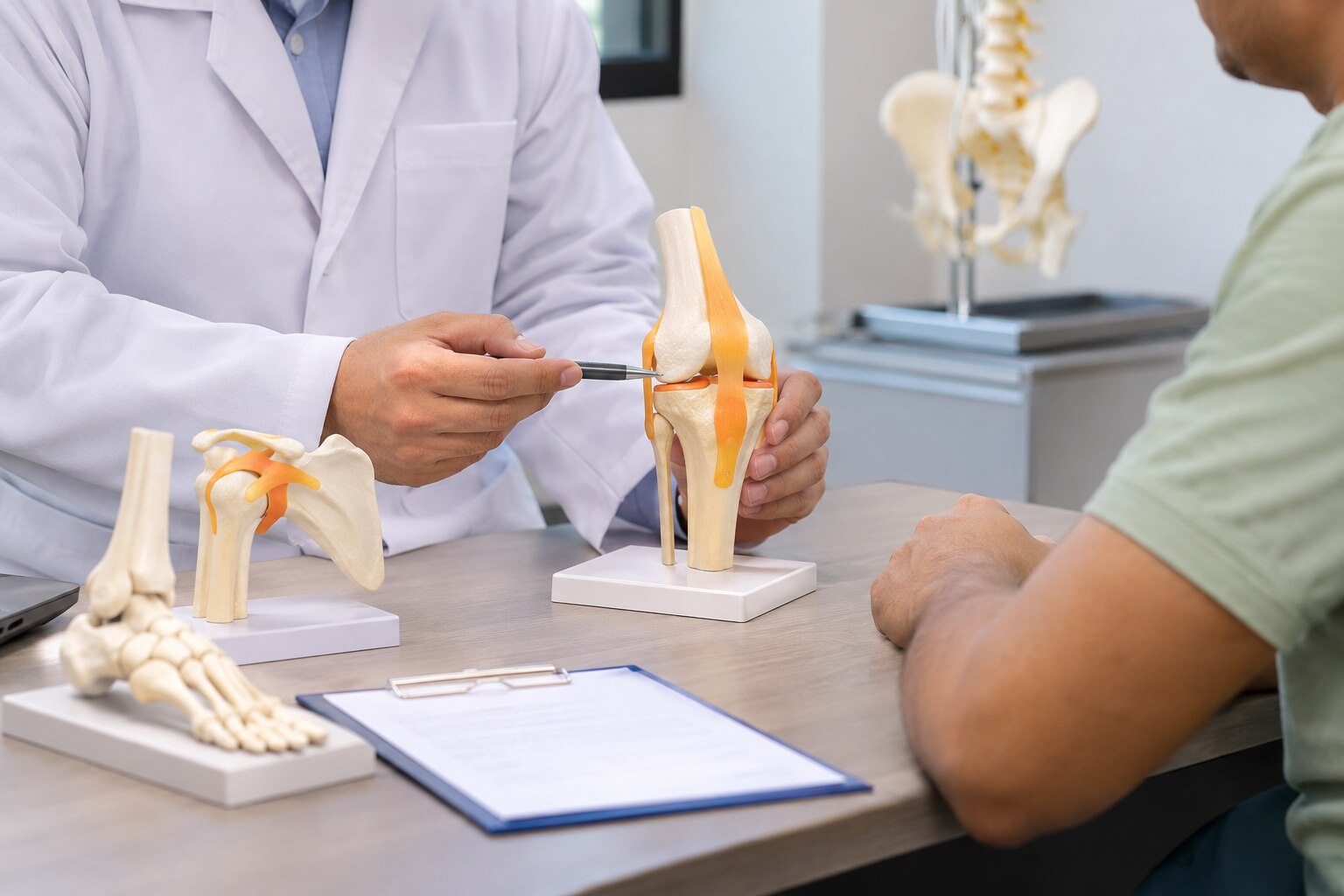
Before booking physiotherapy for joint pain kondhwa, ask whether the clinician will examine the painful joint rather than select treatment by body part alone. The assessment should cover movement, strength, swelling, walking or hand function, recent injury, medical conditions, and your goals.
A suitable provider explains the working diagnosis, gives a home plan with repetitions or time and frequency, records precautions, and defines when to refer. For physiotherapy in NIBM, confirm that progress will be measured through function, range of motion, strength, or a pain and function score.
What should a proper joint assessment include?
A proper assessment links your symptoms to function before selecting treatment. The physiotherapist should examine the joint, the surrounding muscles, your medical history, and the activity you need to regain—not choose a routine from the body part alone.
1. Identify the pain: location, onset, severity, irritability, stiffness pattern, swelling, clicking, instability, and what worsens or eases it.
2. Review the history: recent injury, previous surgery, fracture, arthritis, neurological symptoms, fever, unexplained night pain, other illnesses, medicines, and your work, sport, walking, or hand-use demands.
3. Test function: observe gait, stairs, balance, reaching, or gripping, then measure joint range, strength, swelling, tenderness, and movement quality. Record a baseline such as walking distance, stair ability, or a validated pain-and-function score.
4. Screen for a different problem: progressive weakness or numbness, systemic illness, suspected inflammatory disease, severe trauma, or unexplained symptoms should prompt medical referral rather than routine treatment.
5. Build the plan from findings: specify exercises, repetitions or time, frequency, acceptable symptom response, and progression. Manual therapy can support movement or pain relief, but it should accompany therapeutic exercise rather than replace it.
If surgery occurred, confirm the procedure, operation date, wound status, weight-bearing permission, and range-of-motion restrictions with the surgical team. A search for “joint pain physiotherapy Pune” should still lead you to ask when outcomes will be reassessed and what happens if you do not improve.
Which treatments support lasting joint recovery?
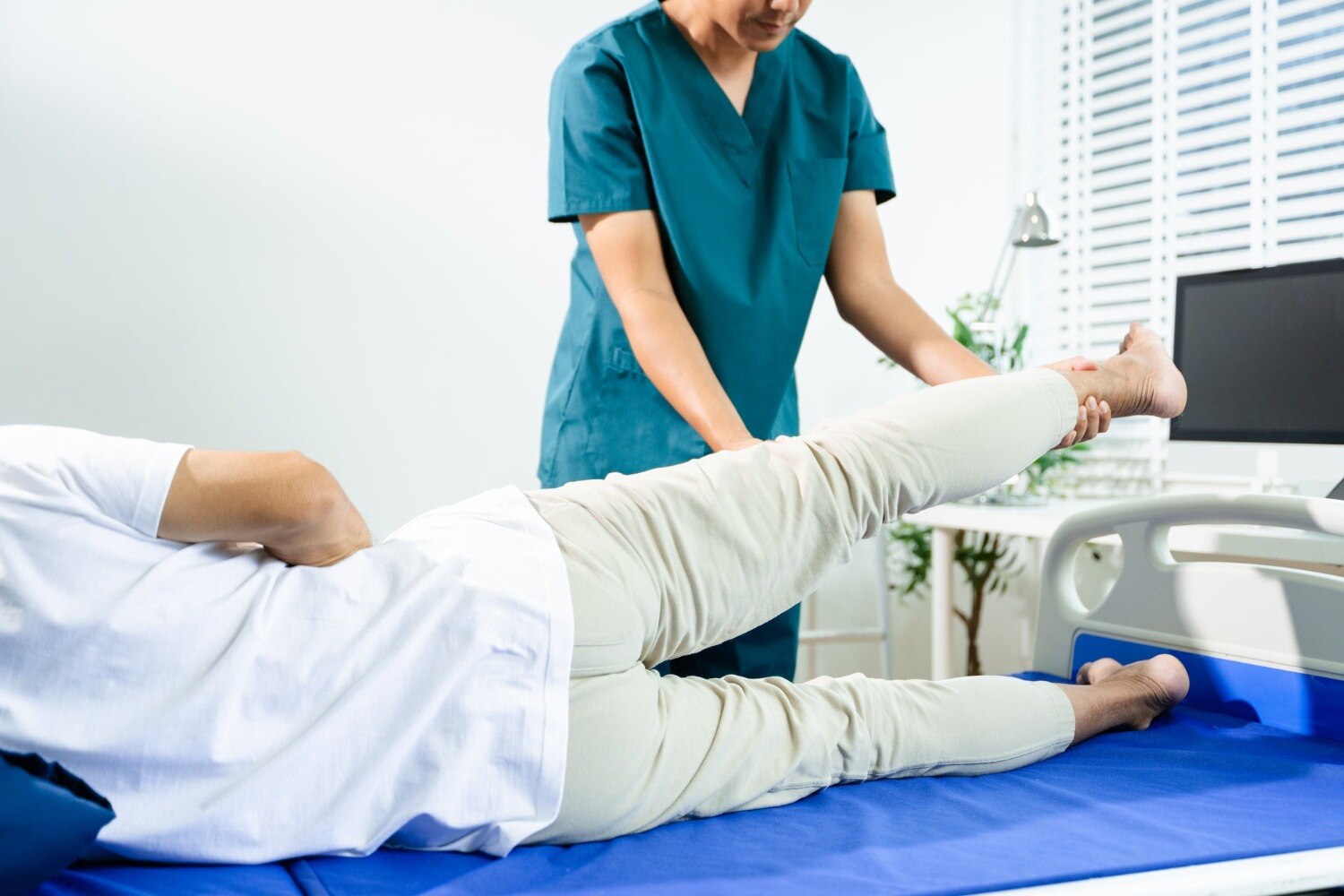
Lasting joint recovery comes from progressive exercise, functional practice, and adherence, not short-term pain relief alone. For osteoarthritis, manual therapy such as mobilisation or soft-tissue work belongs alongside therapeutic exercise, never as the entire plan.
NICE advises against routinely using TENS, ultrasound, interferential therapy, laser, pulsed short-wave therapy, or neuromuscular electrical stimulation because benefit is uncertain.
Your plan should state:
- Which exercises to perform, with repetitions or time, frequency, and an acceptable symptom response.
- How strength, flexibility, balance, walking, or stair practice will progress as capacity improves.
- What you must do between appointments, rather than relying on treatment received in the clinic.
- When outcomes will be reviewed using walking distance, stair ability, range of motion, strength, or a validated pain-and-function score.
- When failure to improve, worsening neurological symptoms, unexplained night pain, systemic illness, or suspected inflammatory disease requires referral.
| Treatment choice | Appropriate role | What to check |
|---|---|---|
| Therapeutic exercise | Core treatment for osteoarthritis and many tendon, muscle, and ligament problems | Confirm progression and a written home programme |
| Manual therapy | Short-term support for movement or pain | It must accompany exercise, not replace it |
| Electrotherapy | Not routine for osteoarthritis | Do not mistake equipment availability for superior care |
After surgery, fracture fixation, or ligament reconstruction, follow the surgeon’s weight-bearing and range-of-motion restrictions. A location search such as orthopedic physiotherapy Pune or physiotherapy clinic Kondhwa identifies proximity, not quality; verify assessment, precautions, documented goals, and a referral pathway.
How should rehabilitation change after surgery or with chronic pain?
After orthopaedic surgery, the procedure—not a generic online programme—sets the rules. Before progressing, your physiotherapist should confirm the operation and date, the surgeon’s range-of-motion and weight-bearing limits, wound status, and permitted loading. Ignoring a restriction can stress healing tissue or delay recovery.
Your between-visit plan should specify:
- The exercise and its purpose
- Repetitions, duration, and frequency
- The symptom response that is acceptable
- The measure or milestone that permits progression
Persistent pain changes the starting level, not necessarily the need to move. For osteoarthritis or other chronic pain, exercises should match irritability, fitness, medical conditions, and your functional goal, such as walking farther, climbing stairs, returning to work, sleeping better, or using your hand.
The aim is not zero pain before activity; it is better function without a sustained flare. A first-session reduction in pain does not prove lasting recovery.
At physiotherapy in nibm, ask when progress will be measured through range of motion, strength, walking distance, stair ability, or a validated pain-and-function score. If improvement stalls, neurological symptoms progress, or unexplained night pain appears, request reassessment or medical referral instead of repeating the same treatment indefinitely.
How do you compare a physiotherapy clinic in Kondhwa or NIBM?
A nearby provider is worth choosing only if it can show how it will assess, treat, and measure your joint recovery—not merely offer a convenient address. Searches for physiotherapy clinic Kondhwa and physiotherapy in NIBM identify location, not quality. Ask:
- Will you examine movement, strength, swelling, walking or hand function, recent injury, medical conditions, and my goals?
- What is your working diagnosis, what alternatives remain, and what would require an orthopaedic referral?
- What exactly is my home plan: exercises, repetitions or time, frequency, acceptable symptom response, and progression?
- Which precautions will you document after surgery or with other health conditions?
- When will you recheck range of motion, strength, stair ability, walking distance, or a validated pain/function score?
| Option | What to ask | What the answer means |
|---|---|---|
| Assessment-led plan | How will findings change my exercises and goals? | Individualised care with a clear rationale |
| Modality-led plan | Is treatment mainly TENS, ultrasound, laser, or similar equipment? | Equipment is not proof of better osteoarthritis rehabilitation |
| Trackable plan | What result will we review, and when? | Progress can be measured instead of judged by first-session pain relief |
| No referral pathway | What happens if pain worsens or fails to improve? | Choose another provider if there is no reassessment or medical referral process |
A hot, visibly swollen joint with fever needs urgent medical assessment, not routine physiotherapy. If rehabilitation reveals a need for orthopaedic review, the business can be considered as one local referral point; ask what examination and next step it provides.
Frequently asked questions
When does joint pain need urgent medical assessment instead of physiotherapy?
Seek urgent medical assessment for suspected fracture, dislocation, infection, or serious tissue damage. Warning signs include a deformed joint, inability to bear weight, sudden severe swelling, fever with a hot joint, or new numbness and weakness.
What should a proper joint assessment include?
The assessment should review your injury history, pain pattern, joint movement, muscle strength, stability, swelling, gait, and functional limits. It should also identify symptoms that require orthopaedic evaluation or imaging.
Which treatments support lasting joint recovery?
A lasting plan usually combines targeted strengthening, mobility work, balance or gait training, activity modification, and a home exercise programme. Manual therapy or pain-relief methods should support active rehabilitation rather than replace it.
How should rehabilitation change after surgery or with chronic joint pain?
After surgery, exercises must follow the procedure, tissue-healing stage, weight-bearing restrictions, and surgeon’s instructions. Chronic pain rehabilitation should progress gradually while addressing strength, movement, sleep, work demands, and flare-up management.
How can you compare a physiotherapy clinic in Kondhwa or NIBM?
Ask who will assess you, whether the plan is tailored to your diagnosis and goals, how progress will be measured, and what home exercises you will receive. Confirm that the clinic can coordinate with an orthopaedic doctor when symptoms need medical review.
Keywords