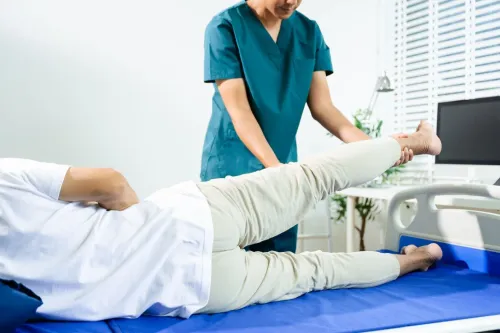

A suspected fracture needs medical assessment even if you can still move the injured arm or leg. By the end, you will know what to do before reaching care, how doctors decide between a cast and surgery, which warning signs demand urgent review, and how to assess fracture services in Kondhwa and Pune.
Key takeaways
- Keep the injured limb still; never straighten, massage or test it.
- Seek urgent care for open wounds, numbness, blue fingers or severe deformity.
- Treatment decisions depend on alignment, stability, fracture location and imaging.
- Follow cast-care instructions and attend repeat imaging before returning to activity.
What to do immediately when you suspect a fracture
Do not straighten, massage or test a painful limb after a fall or blow. Keep it still in the position you find it, and arrange prompt medical assessment even if the person can move it. Pain, swelling, bruising, deformity, tenderness and reduced function all support concern for a fracture.
- Call emergency services for heavy bleeding, exposed bone, severe deformity, a cold or blue hand or foot, numbness, increasing weakness, or a suspected neck, back or pelvic injury. Keep the person still.
- Cover an open wound with a clean dressing without pushing the bone back. Apply gentle pressure around, not over, the exposed bone.
- Support the injured area with a padded splint or folded clothing. Extend support beyond the joints above and below the injury, but do not tighten it enough to cause numbness or colour change.
- Remove rings, watches and tight footwear before swelling increases. Use a wrapped cold pack for up to 20 minutes; never place ice directly on skin.
- Do not allow weight-bearing, driving, sport or heavy work. Do not give food or drink if urgent surgery could be needed, unless emergency clinicians advise otherwise.
Seek an orthopaedic assessment promptly; a fracture doctor Kondhwa patients can reach should assess circulation and nerve function before and after any reduction. A normal first X-ray does not exclude every fracture: suspected scaphoid injury may need continued wrist immobilisation and repeat X-ray, MRI or CT rather than unrestricted use.
How doctors decide between a cast, reduction and surgery
A cast is enough when imaging shows a well-aligned, stable fracture that is unlikely to shift during healing. Doctors also examine skin, swelling, pulses, sensation and movement; a normal X-ray does not excuse a missed nerve or blood-vessel injury.
| Option | What it means | When it applies |
|---|---|---|
| Cast or splint | Holds the bones in position while they heal | Alignment is acceptable, the fracture is stable, and swelling permits safe immobilisation |
| Reduction followed by cast | Restores alignment without an operation, then immobilises it | Displacement, angulation or rotation exists, but the position can be corrected and maintained |
| Surgery with fixation | Uses plates, screws, rods or wires to stabilise the fracture | The break involves a joint surface, remains unstable, cannot hold alignment, or has major displacement |
Reduction requires trained clinicians, suitable pain relief or anaesthesia, and a documented circulation and nerve check afterward. Repeat X-rays confirm that alignment was restored and remains stable; a failed reduction can leave shortening, stiffness or abnormal loading.
An open fracture, where a wound connects with the break, needs urgent specialist care rather than routine casting. Treatment includes intravenous antibiotics, a sterile covering, tetanus assessment and operative wound cleaning when indicated.
A hip fracture in an older adult also needs prompt hospital management, with surgery on the day of or after admission when medically feasible.
After a low-energy fracture, ask whether bone-health testing, osteoporosis treatment and falls prevention belong in the plan. These checks matter as much as choosing bone fracture treatment Pune patients can access quickly.
Cast care, follow-up imaging and a safe return to activity
Keep the cast dry and supported. Do not push objects inside it or trim its padding; both actions can injure skin or create pressure points. Elevate the limb during swelling, and move exposed fingers or toes unless your clinician has told you not to.
Contact your fracture clinic promptly for:
- Worsening pain or swelling despite elevation
- Numbness, tingling, blue or pale fingers or toes
- Inability to move the exposed digits
- A wet, cracked, loose or damaged cast
- Fever or foul-smelling drainage
Attend every scheduled review. Follow-up X-rays check whether the bones remain aligned as swelling falls and normal movement returns. A normal first X-ray does not always exclude a fracture: suspected scaphoid injury needs continued immobilisation and repeat X-rays or MRI/CT before unrestricted wrist use.
Do not restart activity because pain has improved. Your clinician bases clearance on the fracture’s location, stability, fixation and imaging.
- Weight-bearing: increase only to the level prescribed
- Driving: resume only when you can control the vehicle safely without the cast restricting movement
- Sport or heavy work: wait for confirmed healing, strength and movement
A fall from standing height can indicate a fragility fracture. Ask about bone-density testing, osteoporosis treatment and falls prevention.
When choosing an orthopedic surgeon for fracture treatment Pune residents can contact, verify recognised orthopaedic qualifications, registration, emergency neurovascular assessment, suitable imaging, reduction or fixation capability and a documented follow-up plan.
Fractures that need faster action or broader follow-up
An open fracture needs emergency specialist care because the wound connects the outside environment with the broken bone. Cover it with a sterile dressing, avoid pushing the bone back, and seek prompt intravenous antibiotics, tetanus assessment and operative wound debridement when indicated.
Escalate immediately for:
- Numbness, weakness, a pale, blue or cold hand or foot, or a weak or absent pulse
- Severe pain that is increasing despite immobilisation, especially with tense swelling
- Major deformity, skin stretched over a bone, or bone visible through the wound
- New loss of movement after swelling, splinting or reduction
A normal first X-ray does not exclude every fracture. If wrist pain is centred over the scaphoid after a fall, keep the wrist immobilised and arrange repeat imaging or MRI or CT rather than returning to unrestricted use.
| Situation | Why broader follow-up matters | What to arrange |
|---|---|---|
| Low-energy fracture after a standing-height fall | It can indicate osteoporosis and future fracture risk | Bone-health assessment, falls prevention and osteoporosis treatment review |
| Displaced, angulated, rotated or joint-involving fracture | Alignment may be unstable or may affect movement | Orthopaedic review, reduction or fixation assessment and follow-up imaging |
| Pain improvement before healing is confirmed | Early loading can lose alignment or damage fixation | Follow the clinician’s timing for weight-bearing, driving, sport and heavy work |
How to choose fracture care in Kondhwa and Pune
Verify the clinician’s recognised orthopaedic qualification, current medical registration, and experience treating the specific fracture location. A search for fracture treatment with expert orthopedic care Kondhwa Pune is only a starting point; convenience should not replace access to imaging, reduction, fixation and follow-up.
| Setting | Verify before choosing | Best fit |
|---|---|---|
| Independent orthopaedic clinic | On-site or nearby X-ray access, documented circulation and nerve checks, trained reduction, and a referral pathway for surgery | Stable fractures needing assessment, casting or review |
| Hospital with orthopaedic service | CT access when required, operating-room availability, anaesthesia support, and repeat imaging after reduction or fixation | Displaced, unstable, open or joint-involving fractures |
| Emergency department | Rapid neurovascular assessment, pain control, urgent surgical review and admission arrangements | Severe pain, deformity, numbness, pale or cold limb, heavy bleeding, or suspected hip fracture |
Ask who will perform a reduction, what analgesia or anaesthesia will be used, and when repeat X-rays will confirm maintained alignment. Confirm the follow-up date before leaving; pain relief alone does not prove that weight-bearing, driving or sport is safe.
If you consider the business in NIBM, apply these checks and ask how it handles escalation rather than choosing on location alone. After a low-energy fall, ask about osteoporosis assessment and falls prevention.
An older person with a hip fracture needs hospital-led treatment, with surgery targeted for the day of or day after admission when medically feasible.
Frequently asked questions
What should you do immediately when you suspect a fracture?
Keep the limb still in the position you find it, avoid straightening or massage, protect an open wound with a clean dressing, and arrange prompt medical assessment. Do not test whether the person can use the limb.
How do doctors choose between a cast, reduction and surgery?
Doctors use examination and X-rays to assess the fracture’s location, alignment, stability and effect on nearby joints. A cast can support a stable fracture, reduction realigns displaced bone before immobilisation, and surgery is considered when alignment cannot be maintained or the fracture involves specific complications.
How should you care for a fracture cast?
Keep the cast dry, do not insert objects inside it, check fingers or toes for colour and sensation, and elevate the limb for swelling. Contact a doctor for worsening pain, numbness, cold or blue digits, a tight or damaged cast, fever or drainage.
When does a fracture need faster action or broader follow-up?
Seek urgent care for an open fracture, major deformity, loss of sensation, blue or cold fingers or toes, uncontrolled bleeding, severe pain or suspected blood-vessel injury. Children, older adults and people with osteoporosis or multiple injuries need follow-up tailored to their wider health risks.
How can you choose fracture care in Kondhwa and Pune?
Choose a fracture doctor or orthopedic surgeon who can arrange appropriate imaging, explain cast, reduction and surgical options, provide documented follow-up, and direct you to emergency care when the injury needs hospital treatment.
Keywords