Osteoporosis can weaken the spine, hip, and other bones without causing pain until a fracture occurs. By understanding screening, fracture-risk assessment, treatment, exercise, nutrition, and fall prevention, you can choose timely care and protect mobility for the long term.
Key takeaways
- Ask for osteoporosis evaluation before a fracture if risk factors are present.
- A DXA scan, fracture history, and fall risk help guide treatment.
- Use resistance exercise, calcium-rich foods, vitamin D, and fall-proofing together.
- Seek urgent care after sudden severe back pain, height loss, or a suspected fracture.
Why osteoporosis evaluation matters before a fracture
Low bone density usually causes no pain, so waiting for symptoms can mean waiting for a fracture. A silent vertebral compression fracture may reveal itself only through new back pain, loss of height, or a stooped posture. You need evaluation based on risk, not discomfort alone.
1. Arrange a bone-health assessment after a fracture from a minor fall, unexplained height loss, new persistent back pain, repeated falls, or prolonged use of medicines that weaken bone. These clues can justify evaluation even when you feel well.
2. Ask whether FRAX should estimate your 10-year probability of a major osteoporotic fracture and hip fracture. FRAX uses clinical risk factors with or without femoral-neck bone density, but it does not replace examination, secondary-cause testing, or clinical judgment.
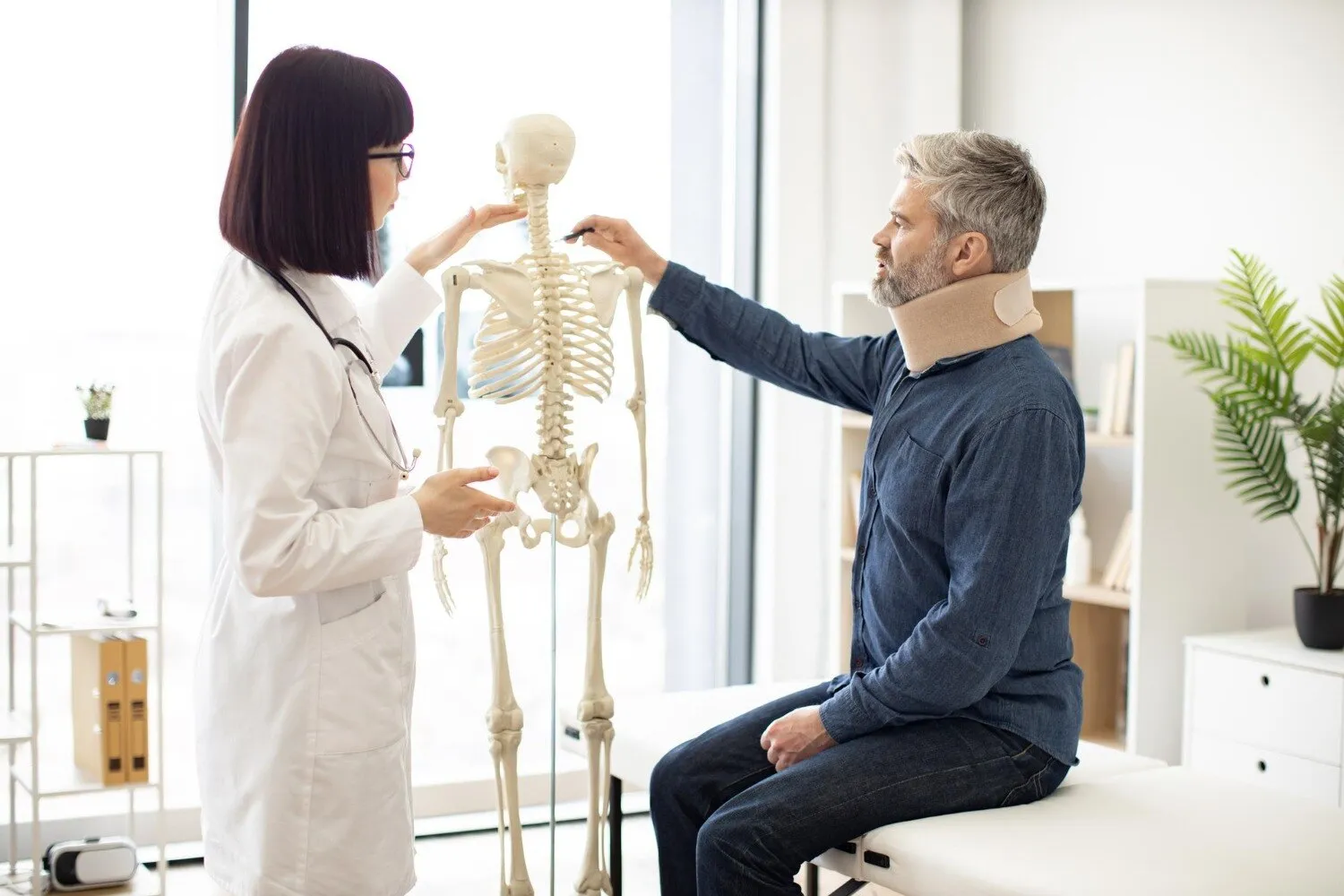
3. Expect the consultation to examine fall hazards as well as bone density. Review vision, footwear, balance, gait, muscle strength, sedating medicines, and dizziness linked to blood-pressure medicines. Smoking, alcohol intake, low protein, and inactivity also deserve a plan.
4. Treat “osteoporosis care bibavewadi” as a location search, not proof of expertise. Choose a clinician who interprets DXA correctly, reviews medicines and secondary causes, explains fracture risk, and schedules follow-up.
Sudden severe back pain, inability to bear weight after a minor fall, suspected hip fracture, new neurological symptoms, or repeated falls require prompt medical assessment rather than a routine appointment.
Which tests and risk factors guide a bone-health plan
Treatment decisions combine DXA bone density, fracture history, FRAX probability, and the search for a reversible cause of bone loss.
DXA measures bone mineral density at the hip and lumbar spine; in postmenopausal women and men aged 50 or older, a T-score of −2.5 or lower at the femoral neck, total hip, or lumbar spine is in the osteoporosis range.
| Finding | What it means | How it changes the plan |
|---|---|---|
| DXA T-score −2.5 or lower | Osteoporosis-range bone density | Supports medication after clinical review |
| Hip or vertebral fracture | A major fragility event, even with a later T-score above −2.5 | Often supports treatment consideration |
| FRAX result | Estimates 10-year major osteoporotic and hip-fracture probability, with or without femoral-neck BMD | Helps judge treatment need against the applicable clinical threshold |
| Secondary cause | Another condition or medicine is weakening bone | Requires targeted tests and treatment of the cause |
A hip fracture or vertebral compression fracture deserves particular weight. Vertebral fractures can be silent; new back pain, height loss, or a stooped posture warrants assessment rather than waiting for a low scan result.
Ask about long-term corticosteroids, thyroid excess, kidney or liver disease, low sex hormones, coeliac disease, and medicines that affect bone. Blood and urine tests can identify these causes and alter the treatment choice.
Smoking cessation, limited alcohol, adequate protein, and strength training reduce risk but cannot replace indicated fracture prevention. Talk to a bone specialist for osteoporosis if the scan, fracture history, or FRAX result is difficult to interpret.
Daily habits that protect bone strength and prevent falls
Choose movement that loads both bone and muscle: brisk walking, stair climbing, chair rises, and resistance exercises using bands or weights. Train balance with heel-to-toe walking, tai chi, or supported single-leg stands.
If you have a vertebral or other fragility fracture, marked weakness, or frequent falls, ask a bone health specialist near Bibavewadi Pune for a supervised programme; avoid forceful bending, twisting, jumping, or heavy lifting until assessed.
Support training with these daily habits:
- Eat protein at each meal from eggs, dairy, fish, beans, lentils, or tofu. Ask your clinician whether your calcium and vitamin D intake meets your needs before adding supplements.
- Stop smoking, and limit alcohol because both increase fracture risk.
- Wear secure, non-slip footwear and keep floors, stairs, and bathrooms clear. Improve lighting and install grab rails where needed.
- Review sleeping tablets, sedatives, and blood-pressure medicines if they cause drowsiness or dizziness. Do not stop a prescription without medical advice.
| Fracture-risk level | Exercise approach | Safety adjustment |
|---|---|---|
| Lower risk | Progressive resistance, walking, and balance practice | Increase load gradually; keep good technique |
| Moderate risk | Low-impact weight-bearing and controlled strengthening | Use a trainer or physiotherapist; avoid falls and jerking movements |
| Higher risk or prior vertebral fracture | Individualised, supervised strengthening and balance work | Avoid spinal flexion and twisting; exercise does not replace indicated fracture-prevention medication |
A consultation should also check vision, gait, balance, footwear, home hazards, and muscle strength. Lifestyle changes reduce modifiable risk but cannot reliably reverse established osteoporosis.
How osteoporosis medicines protect bones over time
A search for osteoporosis care bibavewadi should end with a clinician-led plan, not a calcium prescription alone. Medicines reduce fracture risk in different ways, and the safest choice depends on fracture history, kidney function, calcium level, other illnesses, and current medicines.
1. Ask why a bisphosphonate is recommended. Alendronate or risedronate tablets and intravenous zoledronic acid slow bone breakdown; tablets require specific dosing instructions to reduce oesophageal irritation. Reassess fracture risk after 3–5 years. If risk remains high, treatment may continue; if risk is lower, a monitored drug holiday may be considered.
2. Treat denosumab as a scheduled therapy, not an occasional injection. Do not delay or stop it without a follow-on plan, because bone turnover can rebound and vertebral-fracture risk can rise after discontinuation. Confirm the next dose and exit strategy before starting.
3. Estimate calcium from food first. Add supplements only when dietary intake is inadequate, and correct documented vitamin D deficiency. More is not better: excessive calcium or vitamin D can contribute to kidney stones or high blood calcium in some people.
4. Before each review, report new back pain, height loss, a stooped posture, falls, thigh or groin pain, dental procedures, and medicine changes. Arrange blood tests or repeat DXA when the clinician recommends them; monitoring checks response, side effects, and whether the plan still fits your fracture risk.
How to choose local osteoporosis care and know when it is urgent
Choose a clinician who treats fracture risk, not just a DXA report. A bone specialist for osteoporosis in Pune may be an orthopaedic doctor, endocrinologist, rheumatologist, or metabolic-bone specialist. The useful distinction is the assessment they provide.
Ask these questions before booking ongoing care:
- Will you interpret the DXA site-by-site and explain the T-score, Z-score, and scan limitations?
- Will you review previous hip or vertebral fractures, FRAX risk, current medicines, smoking, alcohol, nutrition, and fall history?
- Will you investigate secondary causes such as thyroid disease, steroid use, kidney disease, or vitamin D deficiency?
- What is the follow-up schedule, and how will you monitor treatment response and side effects?
The phrase bone health specialist near Bibavewadi Pune does not prove expertise. The business in NIBM, Pune is worth considering only if its clinician can answer these questions and arrange urgent referral when a fracture is suspected.
| Situation | Best next step | Why it matters |
|---|---|---|
| Sudden severe back pain, new height loss, or a stooped posture | Prompt medical assessment | A vertebral compression fracture can be missed |
| Inability to bear weight after a minor fall or suspected hip fracture | Emergency hospital assessment | Do not wait for a routine osteoporosis visit |
| New numbness, weakness, loss of bladder or bowel control, or other neurological symptoms | Emergency assessment | Spinal or nerve injury needs rapid evaluation |
| Repeated falls, even without pain | Prompt review | Injury risk and balance problems need correction |
Pain is not required for osteoporosis evaluation, but these warning signs should not wait.
Frequently asked questions
Why does osteoporosis evaluation matter before a fracture?
Low bone density often causes no pain. Evaluation can identify fracture risk before a broken bone occurs, while new back pain, height loss, or a stooped posture can signal a vertebral compression fracture.
Which tests and risk factors guide an osteoporosis care plan?
A clinician reviews your age, sex, family and personal fracture history, medicines, medical conditions, height changes, and fall risk. A DXA scan measures bone mineral density and helps guide the plan.
Which daily habits help protect bone strength and prevent falls?
Use weight-bearing and resistance exercise, eat calcium-rich foods, maintain adequate vitamin D, improve balance, keep walkways clear, add suitable lighting, and address vision or footwear problems.
How do osteoporosis medicines protect bones over time?
Osteoporosis medicines reduce bone breakdown, slow bone loss, or strengthen bone formation, depending on the drug. A clinician matches treatment to fracture risk, kidney health, other conditions, and monitoring needs.
When should you seek urgent osteoporosis care?
Seek prompt medical assessment after a fall or suspected fracture, sudden severe back pain, new difficulty walking, noticeable height loss, or a rapidly developing stooped posture.
Keywords