
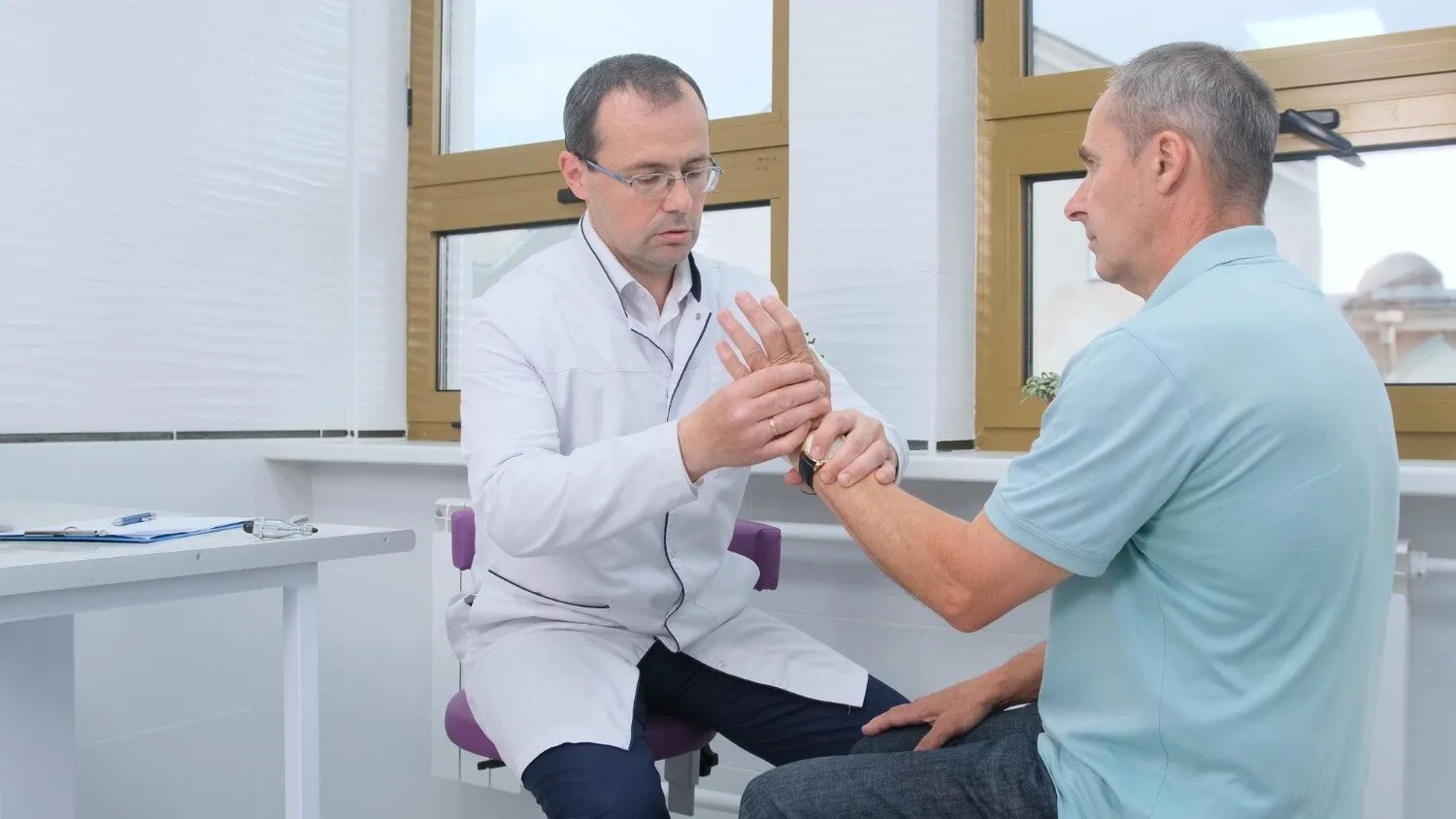
Hand and wrist pain can come from a fracture, tendon disorder, nerve compression, arthritis or a problem that needs urgent treatment. By the end, you will know which symptoms need prompt assessment, what an evaluation may involve, and how to compare local specialists before booking an appointment.
Key takeaways
- Seek urgent care for deformity, numbness, severe swelling, or suspected fracture.
- Persistent pain, weakness, or restricted movement needs specialist assessment.
- Bring injury details, medication names, scans, and previous treatment records.
- Treatment may include activity changes, splinting, physiotherapy, injections, or surgery.
When hand or wrist pain needs specialist assessment
Persistent pain, reduced movement, weakness, deformity, or symptoms that fail to improve after initial home care justify assessment by a hand and wrist orthopedic specialist in NIBM, Pune. Seek review for a suspected fracture or dislocation, a tendon injury, or pain that continues after rest, ice, suitable support, and activity changes.
Get urgent medical assessment after an injury if you have:
- A visible deformity or an open wound
- A cold, pale, blue, or otherwise discoloured hand
- Inability to move the wrist or fingers
- Numbness or tingling in the hand or fingers
- Rapidly increasing swelling or severe pain
Severe swelling or pain after trauma can indicate a fracture even when the wrist looks straight. A normal appearance does not rule out a small or hidden fracture, and delaying assessment can worsen stiffness or healing problems.
Hand-and-wrist care covers more than broken bones. Assessment may involve the bones, joints, tendons, ligaments, nerves, and blood vessels. Persistent tingling, weak grip, difficulty making a fist, or dropping objects also deserves review because nerve or tendon problems need different treatment from a simple strain.
If a cast has been removed but pain, swelling, weakness, or limited motion remains, arrange reassessment rather than assuming it is normal recovery.
What your symptoms may indicate
The pattern of pain, numbness and weakness often points to the affected structure. Carpal tunnel syndrome is median-nerve compression at the wrist, causing burning, tingling or numbness in the thumb, index, middle and part of the ring finger. Symptoms often worsen at night.
Persistent numbness, weakness or dropping objects needs assessment because nerve treatment differs from care for a joint or tendon.
| Condition | Typical pattern | What it may require |
|---|---|---|
| Carpal tunnel syndrome | Night-time tingling, burning or numbness in the thumb, index, middle and part of the ring finger | Nerve assessment and treatment for compression |
| De Quervain tenosynovitis | Pain on the thumb side of the wrist during gripping or thumb movement | Examination of the thumb tendons |
| Osteoarthritis | Activity-related pain and stiffness in a joint | Joint assessment and targeted treatment |
| Inflammatory arthritis | Prolonged morning stiffness, swelling and symptoms in several joints | Blood tests and possible rheumatology input |
A wrist pain doctor in NIBM should identify the cause rather than label every symptom as general strain. De Quervain tenosynovitis is a tendon-sheath disorder, not simply weakness. Osteoarthritis differs from inflammatory arthritis, which can require medical evaluation beyond an orthopedic intervention. Seek prompt care for worsening weakness, persistent sensory loss or loss of grip.
How a specialist investigates hand and wrist pain
Diagnosis starts with the story of the problem: how the injury happened, when pain began, and whether it followed a fall, twist, impact or repetitive use. The examination maps the exact pain location and checks swelling, bruising, tenderness, grip strength, finger and wrist movement, sensation, circulation, and nerve function.
The scan should answer a specific clinical question.
| Option | What it shows | When it applies |
|---|---|---|
| Plain radiograph | Bone alignment, fracture and arthritic change | Suspected fracture or arthritis |
| Ultrasound | Selected tendons and superficial soft tissues during movement | Suspected tendon or soft-tissue problem |
| MRI | Occult fracture, ligaments and other soft-tissue pathology | Persistent suspicion after normal X-rays |
| CT | Detailed bone structure and difficult fracture patterns | Occult or complex fracture assessment |
A normal first wrist X-ray does not exclude a scaphoid fracture. Persistent tenderness in the anatomical snuffbox—the hollow at the thumb-side wrist—can lead to immobilisation, repeat radiographs, or MRI/CT rather than reassurance.
Advanced imaging is not automatically necessary for every wrist-pain episode. The orthopedic doctor Pune patients choose should explain what diagnosis the scan will confirm, how the result will change treatment, and why examination and plain radiographs are insufficient; unnecessary imaging adds cost, delay and incidental findings without improving decisions.
What hand and wrist treatment may involve
Treatment depends on the diagnosis. For hand pain treatment in Pune, uncomplicated sprains, tendon irritation and overuse problems often begin with activity modification, a short period of suitable splinting, pain relief when safe, and guided exercises or hand therapy. Prolonged immobilisation can cause stiffness, so wearing a splint longer is not automatically better.
- Carpal tunnel syndrome: A neutral-position night splint may relieve symptoms short term. A corticosteroid injection can also help temporarily, but persistent significant median-nerve compression may require surgery.
- Fracture recovery: Cast removal does not end treatment. Stiffness, weakness and swelling can require rehabilitation; persistent pain, poor grip or limited movement needs reassessment.
- Tendon or sprain problems: Gradual movement and hand therapy restore strength after the painful phase. Returning to forceful gripping too quickly can prolong irritation.
Oral NSAIDs are not risk-free. Before using ibuprofen, naproxen or another anti-inflammatory, review your medication history and medical conditions, especially kidney disease, a previous ulcer or gastrointestinal bleeding, anticoagulant use, or some cardiovascular conditions. A clinician can help decide whether the medicine is appropriate and what alternative is safer.
Night numbness, persistent tingling, hand weakness or dropped objects need assessment rather than repeated self-treatment. The right plan may involve therapy, injection, surgery or a different diagnosis entirely.
How to compare a local specialist and prepare for the visit
Choose a hand and wrist orthopedic specialist in NIBM Pune by comparing capability, not distance. A nearby clinic is convenient, but proximity in NIBM does not prove diagnostic or surgical expertise. Check:
- Does the clinician assess traumatic injuries and non-traumatic problems such as nerve compression, tendon disorders and arthritis?
- Is hand therapy or rehabilitation available after splinting, injection, fracture treatment or surgery?
- Can the service arrange urgent X-rays or other imaging, and refer promptly for surgery, nerve care or vascular concerns?
- How will follow-up assess movement, sensation, grip and persistent pain?
The business serving NIBM can be one place to verify these capabilities, but compare credentials, assessment quality, follow-up and referral access rather than accepting location as proof.
| Compare | What to confirm | Why it matters |
|---|---|---|
| Assessment | The clinician examines injury-related and non-injury conditions | A wrist pain doctor in NIBM must distinguish fractures, tendons, joints and nerves |
| Recovery support | Hand therapy or rehabilitation is available | Cast removal does not guarantee restored grip or movement |
| Escalation | Urgent imaging and surgical or specialist referral pathways exist | Delays can worsen fractures, tendon injuries or nerve compression |
Bring prior X-rays and reports, a medicine list, the injury date and mechanism, and when symptoms began. Note whether symptoms worsen at night, which fingers feel numb, and examples of dropped objects or lost grip. Ask what will happen if the first scan is normal but tenderness or weakness continues.
Frequently asked questions
When does hand or wrist pain need specialist assessment?
Arrange assessment for persistent pain, reduced movement, weakness, deformity, suspected fracture or dislocation, tendon injury, or symptoms that do not improve after suitable home care.
What symptoms may indicate a hand or wrist problem?
Pain location, swelling, bruising, clicking, numbness, tingling, weakness, reduced grip, and restricted movement can help indicate whether the problem involves bone, joint, tendon, ligament, or nerve.
How does a specialist investigate hand and wrist pain?
The specialist reviews your injury or symptom history, examines movement and strength, checks sensation and circulation, and orders imaging such as an X-ray, ultrasound, or MRI when needed.
What can hand and wrist treatment involve?
Treatment may involve activity changes, pain relief, splinting, physiotherapy, injections, fracture management, tendon repair, nerve treatment, or surgery, depending on the diagnosis.
How should you prepare for a hand and wrist consultation?
Record when symptoms began, what worsens them, previous injuries, medicines, medical conditions, and treatments, and bring scan reports or images to the appointment.
Keywords