A twisted knee with rapid swelling, locking, or repeated giving-way needs more than a pain-relief guess. You will learn which clinician to consult, when imaging is useful, how ACL and collateral-ligament treatment differs, and how to prepare for an appointment near Mohamadwadi.
Key takeaways
- Choose an orthopaedic or sports-medicine doctor experienced in knee ligament injuries.
- Expect stability tests followed by MRI when the examination requires soft-tissue imaging.
- Treatment may combine bracing, physiotherapy, activity changes, or ligament reconstruction.
- Return to sport only after strength, movement, and stability testing meet clinical goals.
Which doctor should you consult for a suspected knee ligament injury?
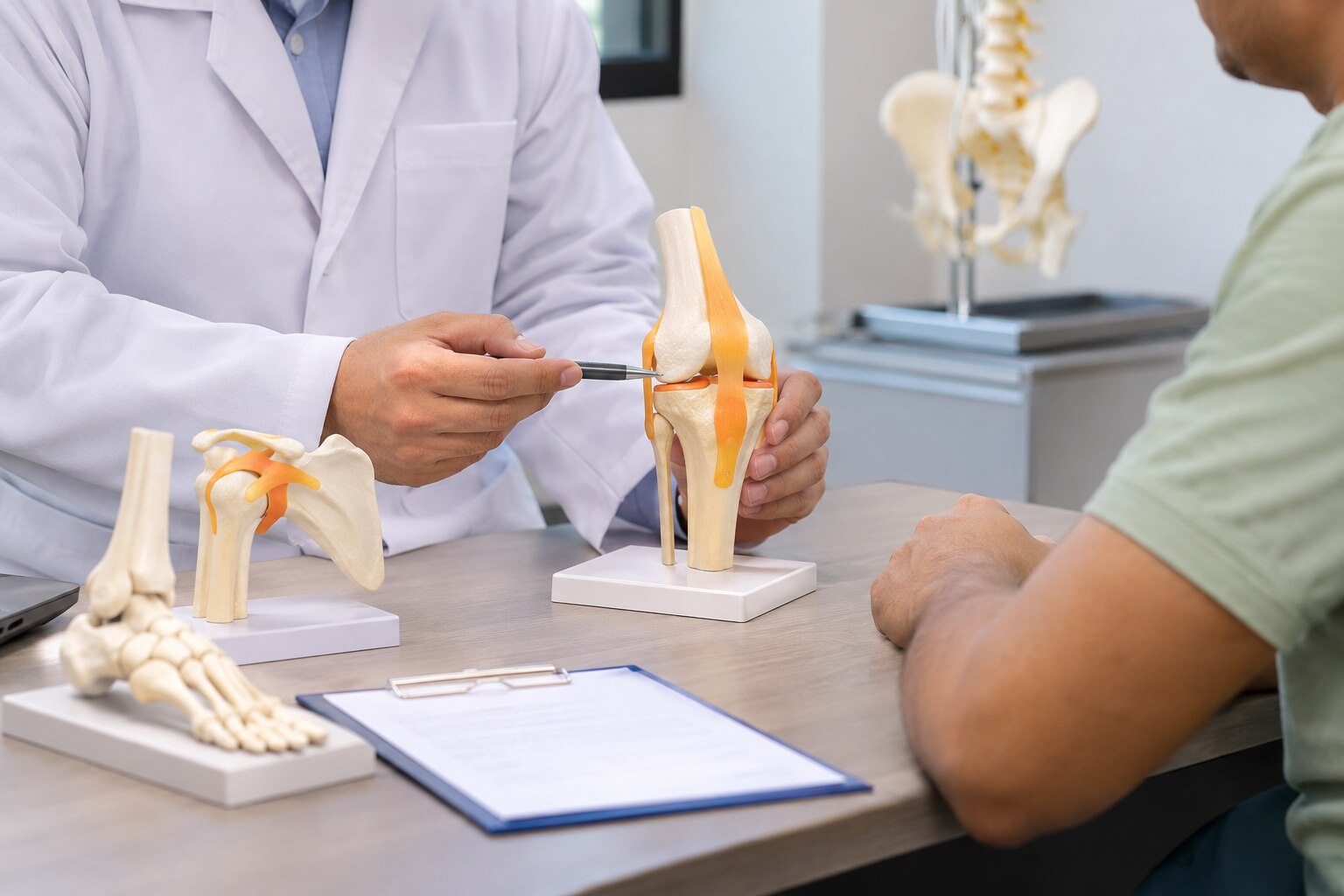
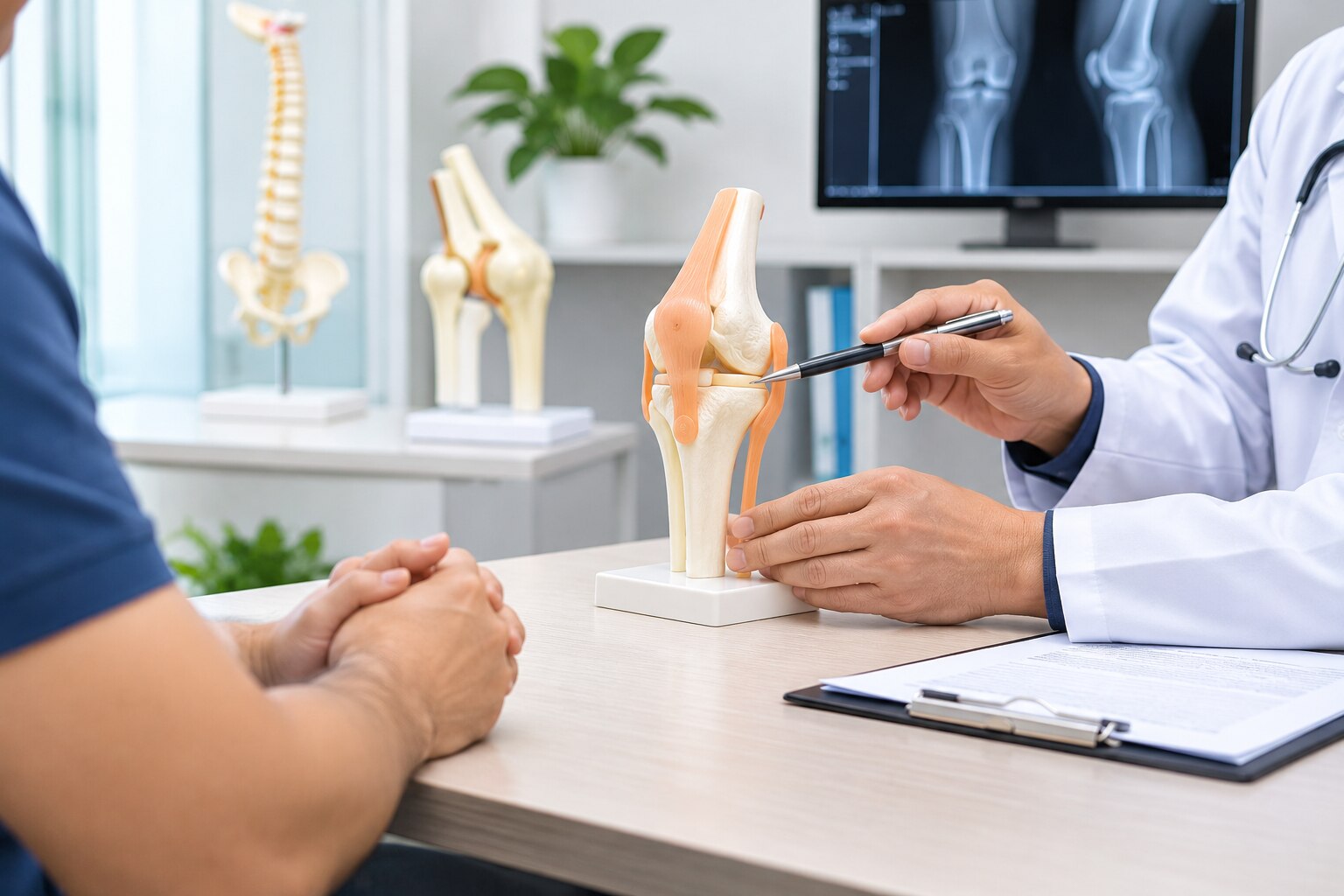
For a suspected knee ligament injury, book an orthopaedic surgeon or sports-medicine orthopaedist who routinely assesses knee and soft-tissue injuries. An orthopaedic doctor for ligament injury near Mohamadwadi Pune should examine instability, coordinate imaging, and create a treatment and rehabilitation plan.
“Orthopedic ligament specialist” is a search label, not a separate regulated specialty. Check the doctor’s medical registration, orthopaedic qualification, and experience with ACL, PCL, MCL, LCL, and multiligament injuries. A knee ligament doctor Pune search should lead to clinical capability, not a title alone.
| Role | Main responsibility | What to verify |
|---|---|---|
| Orthopaedic surgeon | Assesses structural instability, coordinates imaging, and evaluates surgical options | Registration, orthopaedic qualification, and ligament-injury experience |
| Physiotherapist | Leads supervised rehabilitation, strength training, and return-to-activity work | A documented referral or shared plan, progress measures, and movement restrictions |
Do not wait for a routine appointment if you have:
- A visibly deformed knee
- Inability to move or straighten the knee
- A locked joint
- Inability to bear weight after significant trauma
- Numbness, a cold or pale foot, or absent pulses
- Fever, or a hot, markedly red and swollen joint
A physiotherapist handles much of rehabilitation, but an orthopaedic clinician must assess the injury’s structure and decide whether surgical review is needed.
How does a doctor confirm which ligament is injured?
A doctor confirms the injured ligament by matching your injury history with swelling, movement, tenderness, stability tests, and imaging. Pain alone cannot grade a tear.
Tell the clinician:
- The date and exact mechanism of injury
- Whether the knee twisted or pivoted
- When swelling appeared
- Whether you felt or heard a pop
- Any locking, inability to straighten, or giving-way episodes
- Whether you could bear weight immediately and afterward
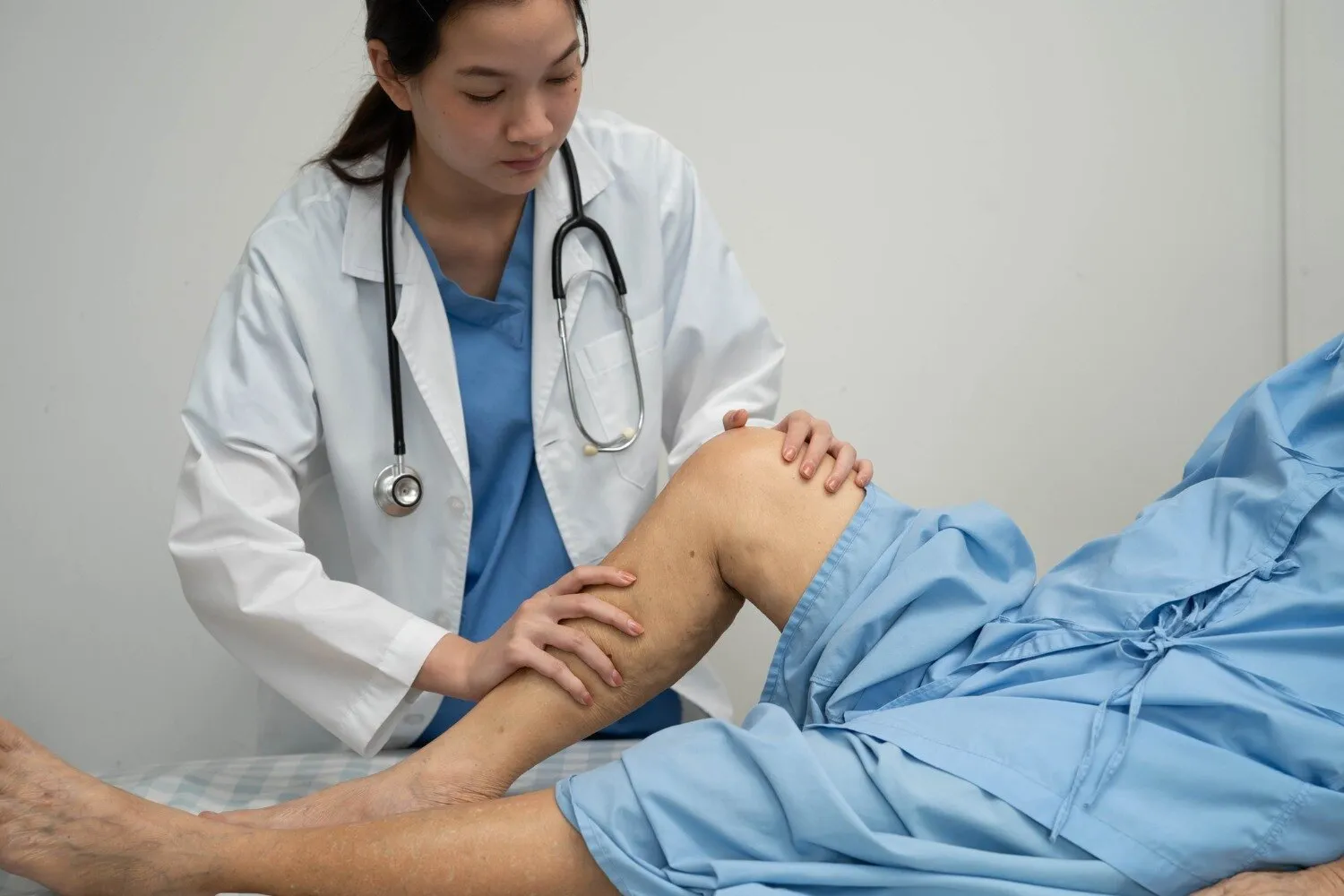
The examination may measure range of motion, joint-line tenderness, weight-bearing ability, and knee stability. The Lachman and anterior-drawer tests assess anterior instability, while valgus and varus stress tests assess the collateral ligaments.
Swelling within a few hours can indicate haemarthrosis, meaning bleeding into the joint. That timing raises suspicion for an ACL tear, patellar dislocation, or intra-articular fracture. Swelling that develops more gradually is less specific and can occur with other sprains or a meniscal injury.
| Scan | What it can show | What it cannot show |
|---|---|---|
| X-ray | Fracture, dislocation, or an avulsion injury | A torn ligament |
| MRI of the knee without contrast | Ligament, meniscal, cartilage, and other internal derangement | Whether the scan alone explains every symptom |
When radiographs show no fracture but internal derangement remains suspected, MRI without contrast is commonly considered. Ask whether the MRI findings match the physical examination before choosing ligament injury treatment Mohamadwadi.
What treatment might be recommended for ACL, MCL, or other ligament injuries?
Ligament injury treatment Mohamadwadi is not one standard package. Treatment depends on the injured ligament, partial or complete tear, instability, meniscal or cartilage damage, age, occupation, and sporting goals.
Early care means protecting the knee from aggravating activity, applying ice through a cloth barrier for short intervals, using compression and elevation for swelling, and taking pain medicine only when medically suitable. Crutches or a brace can protect an unstable knee, but prolonged immobilisation causes stiffness and quadriceps weakness.
Selected partial ACL tears and people without symptomatic instability may do well with structured non-operative care and activity modification. Reconstruction becomes a stronger consideration after recurrent giving-way, pivoting-sport demands, combined ligament or meniscal injury, or persistent functional instability.
An isolated MCL injury is often managed with a hinged brace, temporary activity modification, and progressive rehabilitation; surgery is reserved for selected severe or combined injuries.
Ask what finding makes the proposed treatment necessary:
- Which ligament is torn, and is the tear partial or complete?
- What examination finding proves instability?
- Does MRI show meniscal or cartilage damage that changes the plan?
- What is the goal: daily function, physical work, or a pivoting sport?
- Who will supervise rehabilitation, and when will strengthening and balance work begin?
A knee ligament doctor Pune search should lead to a clinician who explains these choices rather than offering a fixed package. A brace or operation without a clear reason deserves a second opinion.
How long does recovery take, and when is surgery or sport return appropriate?
Recovery follows milestones, not a guaranteed number of weeks. Early rehabilitation targets swelling control, full or near-full motion, and safe weight-bearing; later work adds quadriceps and hamstring strength, balance and proprioception, followed by work- or sport-specific loading.
| Option | Main approach | When it fits |
|---|---|---|
| Non-operative ACL care | Strengthening, movement retraining and activity modification | Selected partial tears or people without symptomatic instability |
| ACL reconstruction | Surgery followed by structured rehabilitation | Repeated giving-way, pivoting-sport demands, combined injury or persistent functional instability |
| Isolated MCL injury | Hinged brace, temporary activity restriction and progressive rehabilitation | Common first-line care; surgery is reserved for selected severe or combined injuries |
Reconstruction is not automatic for every ACL tear. An orthopedic ligament specialist should weigh instability, activity demands, associated meniscal or ligament injuries, and your goals before recommending surgery.
After ACL reconstruction, return to sport depends on strength symmetry, movement quality, knee stability, psychological readiness and completion of the rehabilitation programme—not only time since surgery. Returning with a weak or repeatedly giving-way knee increases reinjury risk.
- Who supervises physiotherapy?
- How will strength, motion and stability be measured?
- When are a brace or crutches needed?
- Which movements, work tasks or sports are restricted?
Persistent swelling, lost motion, locking or repeated instability warrants reassessment rather than simply extending home exercises.
How can you choose and prepare for a ligament-injury consultation near Mohamadwadi?
Choose the clinician by capability: an orthopaedic doctor for ligament injury near Mohamadwadi Pune should routinely assess ACL, PCL, MCL, LCL, and multiligament injuries, document stability findings, arrange X-ray or MRI when indicated, and coordinate rehabilitation with a physiotherapist.
An orthopedic ligament specialist is a search label, not a separate regulated specialty. Verify registration and orthopaedic qualifications. The orthopaedic practice serving NIBM and NIBM Road near Mohamadwadi can use the appointment to create an individual diagnosis and plan, not sell a generic ligament injury treatment Mohamadwadi package.
- Ask whether the clinician manages these injuries routinely and records the stability examination.
- Confirm imaging access, physiotherapy coordination, follow-up arrangements, expected rehabilitation visits, and symptoms requiring urgent review.
- Take the injury date and mechanism, prior scans and written reports, medication list, previous knee injuries or operations, and notes on locking, swelling timing, and giving-way.
| Care check | What to confirm | Why it matters |
|---|---|---|
| Scope | ACL, PCL, MCL, LCL, multiligament experience | Titles alone do not show relevant experience |
| Evidence | Examination findings matched with X-ray or MRI | An MRI report should fit the clinical picture |
| Recovery | Named physiotherapist and measurable follow-up milestones | Rehabilitation needs supervision and reassessment |
Seek a second opinion when reconstruction is proposed, MRI findings do not match the examination, or symptoms continue despite rehabilitation. Ask what requires urgent review, such as worsening swelling, a locked knee, inability to bear weight, numbness, or a cold foot.
Choose the clinician who explains the suspected structure, the evidence for each treatment option, and your next measurable recovery milestone.
Frequently asked questions
Which doctor should you consult for a suspected knee ligament injury?
Book an orthopaedic surgeon or sports-medicine orthopaedist who routinely assesses knee and soft-tissue injuries. Look for a knee ligament doctor in Pune who can examine instability, arrange imaging, and coordinate rehabilitation.
How does a doctor confirm which ligament is injured?
The doctor reviews how the injury happened, checks swelling and movement, and performs stability tests for structures such as the ACL, MCL, PCL, and LCL. X-rays assess bone injury, while an MRI shows ligaments, cartilage, and other soft tissues.
What treatment might be recommended for ACL, MCL, or other ligament injuries?
Treatment depends on the ligament, tear severity, knee stability, activity demands, and associated injuries. Options include rest from aggravating activity, ice, pain relief, a brace, physiotherapy, and surgery such as ACL reconstruction when instability or sport demands justify it.
How long does recovery take, and when is surgery or sport return appropriate?
Recovery ranges from weeks for some isolated sprains to several months for severe tears or reconstruction. Your doctor decides on surgery after assessing instability and goals; return to sport follows restored movement, strength, balance, and sport-specific control rather than a calendar date.
How can you choose and prepare for a ligament-injury consultation near Mohamadwadi?
Choose an orthopaedic doctor who treats knee ligament injuries and can arrange examination, imaging, and rehabilitation. Bring injury details, previous reports, medication information, and a list of symptoms; avoid sport until assessed if the knee feels unstable.
Keywords